.png)

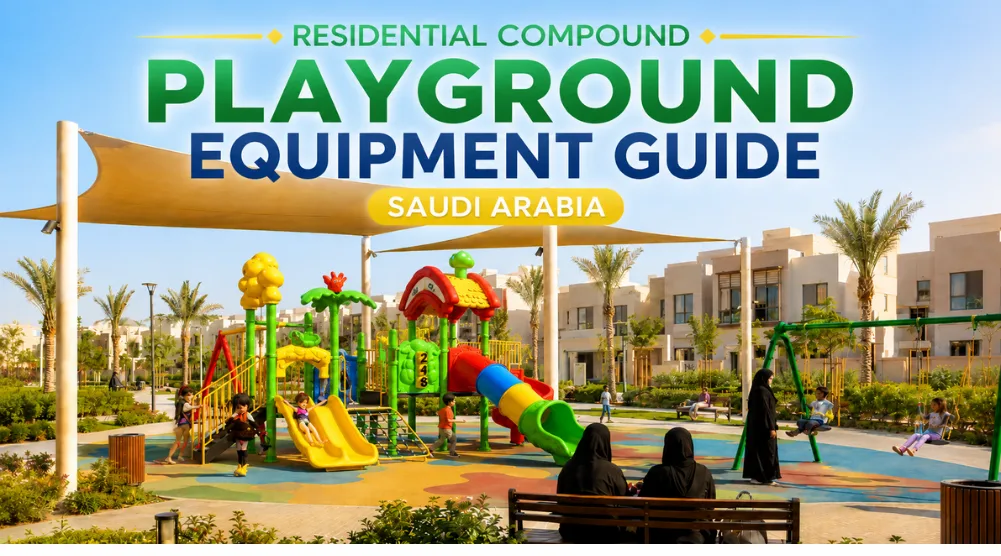

A compound playground should be one of the happiest places in the community. But when the layout is poorly planned, it can quickly become crowded, noisy, difficult to supervise, and frustrating for both children and parents. A large unit may dominate a small site, toddlers may compete with older children, and families may stop using the area because there is no shade, seating, or clear space to move.
For compound managers, developers, and facility teams, selecting playground equipment for residential compounds Saudi Arabia is not simply a product decision. It affects how safely children move, how easily parents can watch them, how often equipment needs repair, and how residents feel about the shared space. Age groups, available area, nearby homes, flooring, drainage, shade, and busy evening use all need to work together.
This guide will help you evaluate the equipment mix, layout, materials, flooring, climate suitability, installation scope, maintenance needs, and supplier support before requesting a quotation. The goal is to create a playground that families enjoy using and facility teams can manage with confidence.
Why Playgrounds Add Value to Residential Compounds

A well-planned playground gives children a designated place for outdoor activity. It also helps families use shared community spaces more comfortably.
For developers and compound operators, the playground becomes part of the wider residential experience. Residents notice whether it feels shaded, accessible, clean, visible, and suitable for their children.
The surrounding features matter too. Seating, paths, lighting, landscaping, waste bins, and shaded waiting areas influence how often families use the space.
Understand Residents Before Selecting Equipment

Start with the people who will use the playground.
Review the number of occupied homes, likely child age groups, accessibility needs, and expected peak-use times. Do not assume that one layout will suit every residential community.
Many Saudi compounds become busiest during cooler evening hours and weekends. A playground that seems spacious during a morning site visit may feel crowded later.
Consider:
- Number of occupied residential units
- Expected number of children
- Main age groups
- Peak evening and weekend use
- Parent supervision patterns
- Accessibility requirements
- Future occupancy changes
- Available facility-management support
This review helps you choose equipment based on actual community needs rather than catalogue appearance.
How to Choose Playground Equipment for Residential Compounds Saudi Arabia

Equipment for Toddlers
Toddlers need low, simple, and easy-to-reach activities.
Suitable options may include:
- Low platforms
- Gentle slides
- Toddler swing seats
- Small tunnels
- Activity panels
- Spring riders
- Low steps
- Ground-level sensory features
Keep toddler activities close to shaded seating and away from swings, rotating equipment, and challenging climbing zones.
Equipment for Children Aged Approximately 4–7
Children in this age group usually need greater variety and movement.
Useful options include:
- Single or double slides
- Small climbing panels
- Bridges
- Standard swings
- Seesaws
- Spring riders
- Activity panels
- Low monkey bars
- Balance features
The layout should allow repeated movement without forcing children across swing paths or slide exits.
Equipment for Older Children
Older children usually need more physical challenge.
Suitable features may include:
- Rope nets
- Monkey bars
- Climbing walls
- Larger slides
- Balance obstacles
- Rotating equipment
- Advanced multi-play structures
Without enough challenge, older children may start using smaller equipment in unintended ways.
Mixed-Age Play Areas
A shared playground can serve several age groups when the layout creates clear levels of challenge.
A mixed-age arrangement may include:
- A visible toddler area
- A central multi-play system
- Separate swings
- Climbing activities for older children
- Ground-level panels
- Clear pathways between zones
The aim is not always to build separate playgrounds. It is to organise activities so each group has suitable options.
Select the Right Equipment Mix
A practical compound playground should offer several activity types instead of relying on one large feature.
Multi-Play Systems
Compact multi-play units work well in limited spaces because they combine several activities within one structure.
Larger systems may include:
- Platforms
- Bridges
- Slides
- Climbing panels
- Rope activities
- Activity panels
- Balance features
Before selecting a unit, review its age suitability, number of activities, exact dimensions, required use zones, visibility, and access points.
You can compare available outdoor playground equipment before finalising the project mix.
Slides
Single slides suit compact and toddler-focused layouts. Double slides may support more simultaneous use during busy periods.
Curved or spiral slides can add variety, but they usually need more careful planning around platform height, footprint, and exit space.
Keep every slide exit clear of paths, benches, and other equipment. Review available commercial swings and slides according to site dimensions and intended age groups.
Swings
Common options include:
- Standard swing seats
- Toddler seats
- Mixed-seat swing frames
- Multi-seat systems
Swings require a clear movement zone. Do not place benches, pathways, entrances, or play panels inside that area.
Climbing and Balance Equipment
Climbing features may include:
- Rope nets
- Monkey bars
- Climbing panels
- Ladders
- Balance bridges
- Low climbing walls
Choose the challenge level according to the intended age group. Avoid placing advanced climbing features directly beside toddler activities.
Spring Riders and Seesaws
Spring riders work well in smaller sites and younger children’s zones.
Seesaws encourage shared play but need sufficient surrounding space. Both are usually more effective as supporting activities than as the playground’s main attraction.
Rounders and Activity Panels
Rounders suit larger areas where their movement zone can remain clear.
Ground-level activity panels support quieter, sensory, social, or imaginative play. They can also improve access for children who may not use elevated structures.
Match the Layout to the Compound Size

| Compound Requirement | Recommended Equipment | Why It Works | Planning Note |
| Small residential compound | Compact multi-play unit, spring rider, activity panel | Combines several activities in limited space | Protect pathways and equipment clearances |
| Medium family compound | Medium multi-play unit, swings, seesaw, toddler corner | Offers several activities at the same time | Separate moving and quiet play zones |
| Large gated community | Large multi-play system, toddler unit, swings, climbing zone | Supports different age groups and higher use | Create clear zones while maintaining visibility |
| Toddler-focused area | Low slide, toddler swings, spring riders, panels | Provides simple, low-level activities | Place near shaded parent seating |
| Mixed-age playground | Multi-play system, toddler features, swings, climbing equipment | Provides different levels of challenge | Separate fast-moving activities |
| Older children’s area | Monkey bars, rope nets, climbing wall, balance features | Provides stronger physical challenge | Allow enough space around active equipment |
| Compact courtyard | Small multi-play unit, wall panels, low balance features | Uses limited space efficiently | Avoid oversized swings and tight circulation |
| Beside a walking track | Multi-play unit, panels, spring riders | Supports play without dominating the site | Keep entrances and equipment clear of the track |
| Staff-housing compound | Durable multi-play unit, multi-seat swings, climbing activities | Supports frequent and concentrated use | Prioritise repairable parts and access |
| Premium development | Custom multi-play system, toddler zone, coordinated shade | Combines play value with project design | Do not reduce usability for appearance |
Final selection depends on usable space, age groups, usage, clearances, supervision needs, and actual site conditions.
A completed residential playground project can also help buyers understand how equipment and surrounding space work together.
Include Inclusive and Easy-Access Features

Accessibility begins at the playground entrance.
Provide smooth access for wheelchairs, strollers, and caregivers. Avoid unnecessary steps, narrow gates, or abrupt surface changes.
Useful features may include:
- Ground-level play panels
- Sensory elements
- Wide pathways
- Supportive seating
- Easy-reach activities
- Transfer features where suitable
- Shaded rest areas
Not every compound requires the same solution. Review the likely users before approving the layout.
Plan Safe Spacing and User Flow

The total plot size is not the same as usable playground space.
The final layout must also account for:
- Product dimensions
- Product-specific use zones
- Swing movement
- Slide exits
- Walking paths
- Seating
- Shade columns
- Landscaping
- Flooring extent
- Maintenance access
Keep moving equipment separate from quiet play areas. Children should not cross swing paths to reach a slide or entrance.
Final clearances depend on the selected product, equipment movement, height, and manufacturer guidance. Read the separate guide to playground safety standards for broader planning guidance.
Improve Supervision and Visibility

Parents and facility teams should be able to see the main activities clearly.
Avoid layouts with:
- Tall planting between seating and equipment
- Large solid panels creating blind spots
- Benches facing away from the playground
- Toddler areas hidden behind large structures
- Poorly lit paths or entrances
Place seating around the perimeter and outside activity clearances. Larger playgrounds may need several viewing points.
Landscaping should improve comfort without hiding children or restricting maintenance access.
Choose Suitable Playground Flooring

Flooring should match the equipment, expected usage, site conditions, and project requirements.
Rubber Tiles
Rubber tiles may suit small and medium playgrounds where modular repairs are useful.
Check the base, joints, edges, drainage, and compatibility with the selected equipment.
Poured EPDM
Poured EPDM offers a continuous appearance and can follow irregular layouts.
Installation quality, base preparation, edging, and repair methods require careful review.
Artificial Grass With a Suitable Shock Pad
Artificial grass may suit projects seeking a landscaped appearance.
Review drainage, seams, heat exposure, high-wear areas, and the support system beneath the surface.
For more detail, review these playground flooring options.
Plan Shade From the Beginning
Shade should be included during the layout stage, not added after equipment selection.
Consider:
- Sun direction
- Expected use times
- Main play activities
- Parent seating
- Air movement
- Shade-column locations
- Maintenance access
Suitable options may include:
- Tensile shades
- Cantilever structures
- Integrated canopies
- Pergolas
- Existing building shade
- Trees combined with structural shade
Shade does not guarantee that exposed surfaces remain cool. Facility teams should still check surfaces during hot conditions.
Add Parent Seating and Supporting Amenities
A residential playground serves families as well as children.
Place benches where parents can see the main equipment. Keep them shaded where practical and outside active movement zones.
Supporting amenities may include:
- Accessible pathways
- Stroller space
- Waste bins
- Evening lighting
- Landscaping
- Shaded waiting areas
- Nearby drinking water where practical
Position waste bins where maintenance teams can reach them without placing them directly beside play equipment.
Lighting should cover paths, entrances, seating, and equipment edges without creating excessive glare.
Select Materials for Saudi Conditions
Material specification affects appearance, service life, and repair requirements.
Buyers who need more technical detail can review the guide to playground materials for Saudi weather.
UV-Resistant Plastic
Suitable outdoor plastic, including UV-resistant LLDPE components, may help limit early fading and degradation.
Ask for the actual material specification instead of judging quality by colour or thickness alone.
Galvanized Steel or Iron
Galvanization protects the underlying steel or iron from corrosion. Powder coating provides the coloured outer finish.
These are separate processes and should not be treated as the same feature.
Check:
- Frame construction
- Welds
- Galvanization
- Surface preparation
- Powder coating
- Fasteners
- Exposed edges
Ropes, Chains, Bearings, and Fasteners
Small components often require attention before the main structure does.
Check their quality, replacement procedure, and availability during supplier comparison.
Plan for Heat, Dust, and Coastal Humidity
Riyadh and Inland Areas
Riyadh projects should account for:
- Strong sunlight
- High heat
- Dust
- Flooring exposure
- Cleaning needs
- Wear around joints and moving parts
Useful planning responses include shade, UV-resistant materials, suitable coatings, easy-clean detailing, and routine inspection.
Jeddah, Dammam, and Khobar
Coastal and humid locations require closer attention to:
- Corrosion protection
- Coating damage
- Fastener condition
- Moisture around foundations
- Drainage
- Flooring edges
Do not assume that one material specification will perform equally in every city. Site exposure, installation, usage, and maintenance all matter.
Prepare the Site and Drainage Correctly
Strong equipment cannot compensate for poor ground preparation.
The site assessment should review:
- Exact dimensions
- Existing levels
- Surface condition
- Underground services
- Irrigation
- Drainage
- Nearby buildings
- Internal roads
- Delivery access
Water should not collect around equipment foundations or flooring edges. Irrigation should not repeatedly soak the playground base.
Coordinate equipment, civil works, flooring, landscaping, lighting, and shade before installation begins.
Consider Noise and Location
Playgrounds create normal activity noise, particularly during evenings and weekends.
Avoid placing high-use equipment directly beside:
- Bedroom windows
- Ground-floor terraces
- Quiet garden areas
- Narrow internal roads
- Main building entrances
Swings, rounders, loose panels, and worn joints may create additional noise.
The final position should balance visibility, convenient access, privacy, supervision, drainage, and distance from vehicle movement.
Understand the Project Process
A clear project sequence helps reduce errors and quotation disputes.
1. Site Assessment
Confirm dimensions, access, drainage, existing surfaces, nearby structures, and utilities.
2. User and Age-Group Review
Identify expected users, peak-use times, main age groups, and accessibility needs.
3. Layout Planning
Show equipment positions, use zones, entrances, paths, seating, shade, and flooring.
4. Product Selection
Choose equipment according to space, age groups, activity variety, and expected use.
5. Flooring and Shade Planning
Coordinate flooring and shade with equipment locations and clearances.
6. Quotation
Confirm all included and excluded work.
7. Supply
Plan delivery, unloading, storage, and site readiness.
8. Installation
Coordinate foundations, equipment assembly, flooring, shade, and surrounding works.
9. Inspection and Handover
Check the completed area before opening it for use.
10. After-Sales Support
Confirm maintenance, repairs, spare parts, and warranty procedures.
Handover information should include:
- Equipment schedule
- Product specifications
- Layout drawing
- Warranty terms
- Maintenance guidance
- Cleaning instructions
- Spare-parts procedure
- After-sales contact information
Plan Maintenance and Spare Parts Before Purchase
Maintenance planning should begin during procurement.
Ask suppliers about:
- Inspection guidance
- Moving-part care
- Cleaning methods
- Coating repairs
- Flooring repairs
- Warranty procedures
- Spare-part availability
- Service response process
Components that may need future attention include:
- Swing seats
- Chains
- Bearings
- Connectors
- Ropes
- Fasteners
- Handles
- Plastic panels
- Rubber tiles
- EPDM edges
A low initial price may provide poor long-term value when replacement parts are unavailable.
For a deeper maintenance overview, read the guide to playground maintenance services.
Residential Compound Playground Planning Checklist
- Available site area: Measure usable space after allowing for paths, seating, landscaping, shade, and clearances.
- Expected users: Estimate likely evening, weekend, and school-holiday demand.
- Age groups: Identify toddlers, younger children, older children, or mixed-age users.
- Equipment dimensions: Confirm exact product length, width, and height.
- Safety clearance: Follow product-specific and manufacturer guidance.
- Swing zones: Keep them clear of paths, benches, and entrances.
- Slide exits: Provide visible and unobstructed landing space.
- Walking paths: Connect entrances, seating, play zones, and nearby facilities.
- Wheelchair and stroller access: Use smooth, practical routes without unnecessary steps.
- Parent visibility: Protect clear views from shaded seating.
- Seating: Keep benches outside active equipment zones.
- Shade: Cover important play and waiting areas without blocking clearances.
- Lighting: Support safe evening movement and supervision.
- Flooring: Match the surface to the equipment and site.
- Drainage: Prevent water collecting around flooring and foundations.
- Landscaping: Improve comfort without creating blind spots.
- Distance from residences: Consider windows, terraces, privacy, and noise.
- Maintenance access: Leave room for inspections, repairs, and replacement parts.
Questions to Ask a Playground Equipment Supplier
- Will you visit the site before recommending equipment?
The visit should confirm dimensions, ground conditions, access, drainage, and surrounding buildings. - Will the layout show equipment use zones and movement areas?
The proposal should identify swings, slide exits, paths, entrances, seating, and shade columns. - How do you confirm age suitability?
The supplier should explain which products suit toddlers, younger children, older children, and mixed-age use. - Which materials and protective treatments are included?
Ask about plastic, galvanization, powder coating, fasteners, ropes, bearings, and outdoor exposure. - How does the proposed system address Saudi weather?
Review heat, sunlight, dust, humidity, corrosion, and drainage considerations. - Which flooring is recommended and why?
Confirm the surface, base preparation, edging, drainage, and included installation work. - What does the installation scope include?
Check delivery, unloading, foundations, civil work, assembly, flooring, cleaning, inspection, and handover. - What support is available after handover?
Confirm warranty coverage, spare parts, maintenance services, repair procedures, and support contacts.
Common Purchasing Mistakes
Selecting Equipment Before Measuring the Site
This often causes overcrowding, weak circulation, and clearance problems.
Using One Large Unit for Every Age Group
One structure rarely provides the correct challenge for toddlers and older children.
Ignoring Peak Evening Use
The playground should be planned for its busiest realistic period.
Buying According to Appearance Alone
Colours and themes do not confirm structural quality, climate suitability, or spare-part availability.
Treating Flooring and Shade as Later Additions
Both influence the layout and should be planned early.
Placing the Playground Too Close to Homes
Poor positioning may create noise, privacy, and resident-comfort problems.
Comparing Equipment Price Instead of Full Scope
Review delivery, civil work, installation, flooring, shade, handover, warranty, and support.
FAQs
What playground equipment is suitable for a residential compound?
Suitable options may include multi-play systems, swings, slides, climbing units, spring riders, seesaws, rounders, activity panels, and balance features. The final mix should reflect the available area, expected number of children, age groups, peak use, supervision needs, and actual site conditions.
How much space is needed for a compound playground?
The required area depends on equipment dimensions, product-specific use zones, swing movement, slide exits, paths, seating, shade columns, and landscaping. Measure usable space rather than the total plot. Final planning should follow the selected equipment design and manufacturer guidance.
How do you choose equipment for different age groups?
Identify whether the site will serve toddlers, younger children, older children, or mixed ages. Toddlers need low and simple activities, while older children need greater challenge. Mixed-age layouts should separate fast-moving features and provide clear zones with different difficulty levels.
Which playground flooring is suitable for residential compounds?
Rubber tiles, poured EPDM, and artificial grass with an appropriate shock-absorbing system may all be considered. The correct option depends on equipment, usage, base condition, drainage, repair needs, project specifications, and the required performance for the selected layout.
Does a compound playground need shade?
Shade is useful in Saudi conditions, especially over busy equipment and parent seating. Plan it according to sun direction, use times, equipment height, airflow, and column positions. Shade does not guarantee cool surfaces, so exposed areas still require checks during hot weather.
Where should the playground be located inside the compound?
Choose a visible and accessible area away from vehicle movement and sensitive residential windows where practical. Review noise, privacy, paths, drainage, lighting, landscaping, supervision, and maintenance access. The final location should respond to the complete compound layout.
What materials perform well in Saudi weather?
Suitable systems may include UV-resistant outdoor plastic, galvanized steel or iron, powder-coated frames, durable fasteners, and weather-resistant ropes or moving parts. Performance still depends on the material specification, installation, city, exposure, usage, and ongoing maintenance.
How often does compound playground equipment need maintenance?
Maintenance frequency depends on equipment type, use level, moving parts, weather exposure, site conditions, and manufacturer guidance. High-use compounds may need closer monitoring. Checks should cover fasteners, coatings, ropes, chains, flooring, shade, drainage, and damaged components.
Can playground equipment be customised for limited space?
Equipment selection, colours, panels, layout, and supporting features may often be adjusted for compact sites. However, customisation should not reduce movement zones, slide exits, supervision, accessibility, or maintenance access. Final decisions should follow actual measurements and product requirements.
What should be included in a playground supplier’s quotation?
A clear quotation should list equipment, delivery, unloading, foundations, installation, flooring, shade, civil work, drainage responsibilities, inspection, cleaning, handover documents, warranty, exclusions, spare parts, and after-sales support. Compare the complete project scope rather than equipment price alone.
Conclusion

A successful residential playground begins with the site, residents, and expected use—not the product catalogue.
The best playground equipment for residential compounds Saudi Arabia should suit the available space, age groups, climate, supervision needs, and maintenance capacity. Equipment, flooring, shade, drainage, seating, and access should work as one coordinated system.
Garden Links supports residential compounds, gated communities, villa developments, and staff-housing projects across Saudi Arabia. Share your city, usable site dimensions, expected age groups, existing surface, and required project scope to request a site-based playground proposal.