
.png)

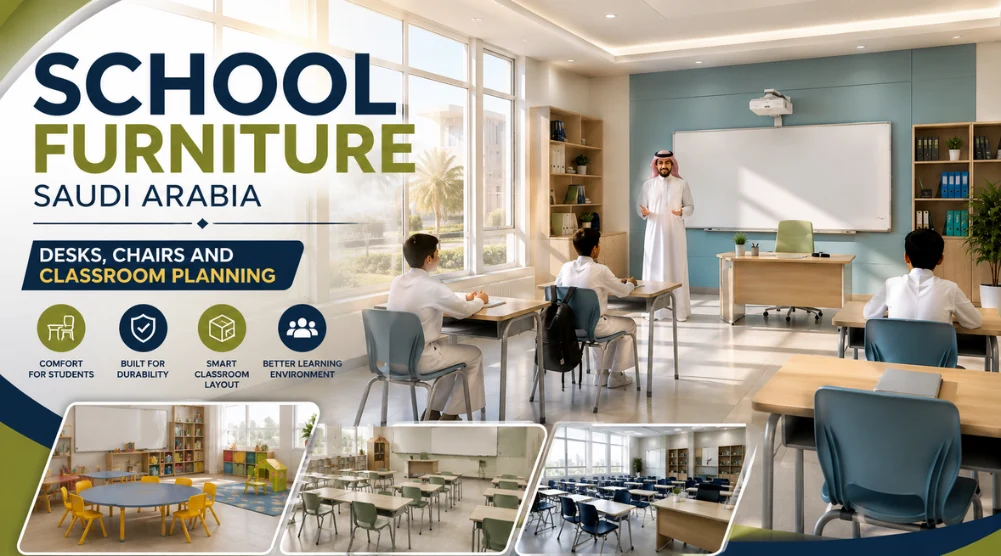

Choosing the right school furniture Saudi Arabia projects need is not only about filling classrooms with desks and chairs. It shapes how students sit, learn, move and use the space throughout the day. A well-planned classroom feels open, organized and comfortable, while poor furniture choices can make the room crowded, awkward and harder for both students and teachers to use.
Every learning space has different needs. Nursery children need low, simple furniture they can use with confidence. Primary and secondary students need suitable desk heights, enough legroom and space for books or devices. Training rooms and adult classrooms may require flexible layouts that can change from one session to another.
The right choice starts with practical questions. Does the furniture suit the students’ age? Will it fit without blocking doors or walkways? Can teachers move easily between rows? Are the surfaces simple to clean? Is there enough space for storage, group work and daily classroom routines?
Garden Links supports educational projects across Saudi Arabia, but successful planning starts before an order is placed. This guide covers furniture types, sizing, materials, classroom layouts, maintenance, supplier checks and bulk-order planning.
What Should Buyers Consider When Choosing School Furniture in Saudi Arabia?
Buyers should match school furniture to the students’ age, classroom size and daily activities. Desk height, seat height, legroom, stability and surface quality all matter. The room should still have clear walking space after the furniture is placed. Buyers should also consider cleaning, storage, maintenance and whether replacement parts will remain available.
Why Classroom Furniture Deserves Careful Planning
Students use desks and chairs for several hours each school day. They read, write, work in groups, use devices and move between different activities. Furniture that suits their size makes these tasks easier and keeps the classroom more comfortable to use.
The layout also affects teachers. When rows are too tight, reaching students becomes difficult. Poor placement may block the board, doorways or storage areas. A better arrangement gives teachers a clear view of the room and allows students to enter, leave and move without unnecessary disruption.
Furniture that does not suit the age group can create daily frustration. A high tabletop may force younger students to reach upward. A low desk may leave an older student with very little legroom. Chairs that are too wide, narrow or deep may also feel awkward.
Construction matters as much as size. Loose joints can make desks wobble. Damaged edging may feel rough and collect dirt. Unstable cabinets can become difficult to use safely.
Cleaning should be considered from the beginning as well. Smooth finishes, accessible corners and replaceable fittings make routine maintenance easier for school staff.
Main Types of School Furniture in Saudi Arabia

Different rooms need different furniture. Buyers can first review the main school furniture collection and then compare options according to the classroom use.
Individual Student Desks and Chairs
Separate desks and chairs are useful in classrooms that change layout during the week. Teachers can arrange them in rows for individual work, move them into small groups or create wider spaces for activities.
An individual classroom desk may suit primary, intermediate and secondary students, depending on its dimensions. The main point is to match both the desk and chair to the correct age group rather than selecting them separately by appearance.
Two-Student Desks
Double desks give two students one shared writing surface. They may work well where the classroom follows a fixed seating plan or where the school wants to reduce the number of separate desk frames.
Before choosing this style, check the overall width and the space available for both students’ legs, bags and books. A narrow shared desk can feel crowded even when it fits inside the room.
Writing-Tablet Chairs
A writing-tablet chair combines a seat and a compact writing surface. This format is often used in training centres, lecture rooms, examination spaces and classrooms where separate desks would take up too much floor area.
A school chair with writing tablet should provide enough tablet space for the intended activity. Buyers should also check the fixing point, seating position and whether left-handed versions are available.
Nursery Tables and Chairs
Furniture for younger children should be easy to approach and simple to move without becoming unstable. Nursery tables may be used for drawing, puzzles, meals, reading and group activities throughout the same day.
A suitable kids’ table and chairs set should have smooth surfaces, rounded edges and proportions that allow children to sit and stand with less assistance.
Connected Desk-and-Chair Units
A connected unit keeps the seat and writing surface in one fixed arrangement. This can help classrooms maintain neat rows and reduce the amount of furniture movement during lessons.
A school desk and chair set may suit classrooms and study centres that use a stable layout. Buyers should check whether the fixed gap between the chair and desktop suits the intended students.
Teacher Furniture
Teacher desks should provide enough space for documents, books and a computer where needed. Storage drawers can help keep materials organized, but the desk should not dominate the room or block the teacher’s sightline.
Teacher chairs should also suit longer periods of sitting and regular movement around the classroom.
Activity and Group Tables
Activity tables are useful for art, reading, science tasks and shared learning. Round tables encourage face-to-face group work, while rectangular tables may be easier to place in rows or against walls.
Modular tables offer more flexibility, but schools should check how easily they move and whether the frames remain stable when several units are joined.
Shelves and Storage Cabinets
Classrooms often need space for books, bags, stationery, teaching aids and student work. Open shelves give quick access, while closed cabinets keep the room looking tidier.
Storage height should match the users. Items for nursery children should remain within safe reach, while teacher materials may need higher or lockable storage.
Laboratory Furniture
Science rooms need furniture that suits the planned activities and equipment. Work surfaces, teacher visibility and movement between stations should all be considered before ordering.
Laboratory furniture should not be selected as ordinary classroom furniture with a different appearance. The intended room use should guide the decision.
Computer-Room Furniture
Computer rooms need sufficient desk depth for monitors, keyboards and other equipment. Cable paths, electrical points and screen spacing should be planned before the furniture is placed.
Chairs should also allow students to face the screen without crowding the desk or blocking movement behind them.
Choosing School Desks and Chairs by Student Age

One furniture size cannot serve every student group comfortably. Schools should separate their requirements by age and check the manufacturer’s size information before approval.
Nursery Children
Young children need lower furniture that they can reach without climbing or stretching. Seats should allow them to place themselves comfortably at the table and stand without difficulty.
The furniture may be lightweight for easy classroom changes, but it should not tip or slide too easily during use.
Primary School Furniture: Desks and Chairs
Primary classrooms need desks and chairs that support writing, reading and basic device use. The tabletop should be within comfortable reach, while the chair should leave enough room beneath the desk.
At this stage, children can grow quickly, so schools may need more than one furniture size across different grades.
Intermediate and Secondary Students
Older students usually carry more books and may use laptops or tablets during lessons. They need wider work surfaces, greater legroom and chairs that suit their larger body size.
Furniture should remain practical for daily movement without making the classroom feel cramped.
Adult Learners and Training Rooms
Adult learners may spend long periods in lectures, workshops or training sessions. Full-sized desks, conference-style tables and writing-tablet chairs may all be suitable.
The final choice depends on the session length, room capacity and whether the layout needs to change often.
| Student Group | Furniture Requirement | Main Check |
| Nursery children | Low, stable furniture with simple access | Rounded edges and easy supervision |
| Primary students | Age-matched desks and chairs | Balanced seat and desktop height |
| Intermediate and secondary students | Larger writing area and stronger support | Legroom, stability and usable surface |
| Adult learners and training rooms | Full-sized, flexible furniture | Comfort, visibility and movement |
Always compare the proposed furniture with the supplier’s size chart and the actual classroom measurements before confirming quantities.
Common Materials Used in School Furniture

The material combination affects weight, cleaning, appearance and maintenance. Buyers should consider how each item will be used rather than choosing one material for the entire school.
Powder-Coated Steel
Steel is widely used for desk and chair frames because it can provide firm support without requiring a large frame.
A powder-coated finish gives the surface a cleaner appearance and helps protect the metal. The coating should look even, particularly around joints and welded areas.
Steel thickness is only one detail. A well-designed frame with secure joints may perform better than a thicker frame with poor welding or weak support bars.
Laminated and Engineered-Wood Surfaces
Laminated tabletops are common because they provide a smooth surface for writing and are usually easy to wipe.
Buyers should inspect the edge finishing carefully. Water and dirt can enter through damaged edges, while poorly attached edging may become loose during regular use.
Moulded Plastic
Plastic is often used for student chairs, nursery furniture and seat backs. It can be lighter than metal or wooden furniture and may be easier for staff to move.
The moulding should feel firm and evenly finished. Thin or poorly shaped plastic may bend, crack or feel uncomfortable.
Plastic Edge Protection
Edge strips cover the exposed sides of desks and tables. They can give the product a smoother finish and reduce damage to the tabletop edge.
Check that the edging sits tightly against the surface. Gaps may collect dirt or allow the strip to loosen.
Metal Cabinets
Metal storage units may be suitable for files, books and classroom supplies. They can provide secure storage, although they are generally heavier and harder to relocate.
Door alignment, shelf support and handles should be checked before installation.
| Material | Main Benefit | Suitable Use | Main Limitation |
| Powder-coated steel | Provides firm structural support | Desk and chair frames | Adds weight |
| Laminated engineered wood | Smooth writing and work surface | Student and teacher desks | Exposed edges may deteriorate |
| Moulded plastic | Easy to move and wipe | Chairs and nursery furniture | Poor moulding may crack |
| Plastic edging | Covers vulnerable tabletop edges | Desks and activity tables | Loose fitting may need repair |
| Metal sheet | Creates secure storage units | Cabinets and lockers | Less convenient to move |
A product should be judged as a complete unit. Frame geometry, welding, fasteners, finishing and tabletop fixing all affect the final quality.
Classroom Planning Before Selecting Furniture

Measure the classroom before deciding how many desks and chairs to order. A product may look compact in a catalogue but take up much more space when placed in rows with chairs and walking gaps.
Record the room length and width. Mark doors, windows, boards, electrical points, columns and built-in storage. These details influence where furniture can sit.
The number of students should never be considered alone. A room may physically hold a certain number of desks but still feel difficult to use if movement areas disappear.
Teaching style also changes the layout. Rows may suit tests and teacher-led lessons. Group tables work better for collaboration. Flexible learning spaces need furniture that staff can rearrange without too much effort.
The teacher should have a clear line of sight across the room. Main doorways and walking paths should remain open, and students who need more movement space should be considered during planning.
A simple floor sketch can prevent expensive mistakes. It helps buyers confirm furniture size, quantities and placement before delivery.
Cleaning and Maintaining School Furniture
Furniture lasts longer when small issues are handled early.
Classroom staff should clean tabletops, chair surfaces and handles with products suitable for the material. Strong chemicals may fade plastic, damage laminate or affect painted finishes.
Desks and chairs that move frequently should be checked for loose bolts and fittings. A small amount of movement can become worse when it is ignored.
Plastic parts should be checked for cracks, and tabletop edges should be inspected for lifting or damage. Cabinet doors, hinges and shelves also need occasional attention.
Furniture should be lifted where possible rather than dragged. Dragging may damage the legs, weaken the frame or scratch the flooring.
Schools can keep a small stock of common items such as plastic feet, bolts, handles and edge pieces. A simple maintenance log can also help staff track repairs and identify furniture that repeatedly causes problems.
How to Compare School Furniture Before Buying
Product photos often hide the details that matter most. Buyers should compare the furniture construction, not only the colour and shape.
Check whether each desk stands evenly on a flat surface. Look at how the legs connect to the support bars and whether the frame moves when light pressure is applied.
Welds should appear neat and consistent. Bolted joints should feel firm but remain accessible for future tightening.
Inspect the tabletop and edges. The finish should feel smooth, without rough corners, open gaps or uneven coating.
Size options are equally important. A well-made desk can still be unsuitable if it does not match the student age group.
For a large order, request clear specifications, close-up photographs and a sample. The sample can reveal the true colour, weight, stability and finish more accurately than a catalogue image.
Warranty coverage, assembly requirements and access to replacement parts should also be understood before approval.
Buying Mistakes That Can Create Problems Later
Letting Price Make the Whole Decision
A lower cost may help the budget, but it should not replace quality checks. Construction, finishing, maintenance needs and warranty should all be reviewed.
Selecting One Size for the Whole School
Nursery, primary and secondary students need different furniture proportions. Using one size throughout the school may create avoidable discomfort and poor classroom fit.
Skipping Classroom Measurements
A quantity may look correct on a spreadsheet but overcrowd the actual room. Measure first and check where storage and walking paths will go.
Approving a Bulk Order from Photos Alone
Images do not show weight, balance or the exact finish. A sample gives the school a chance to inspect the product before committing to a large quantity.
Forgetting What Happens After Delivery
Cleaning instructions, assembly responsibility and spare-part availability should be confirmed early, not after furniture reaches the school.
Quick School Furniture Buying Checklist
Use this checklist before approving school furniture Saudi Arabia orders:
- Student groups: Separate requirements by age.
- Room measurements: Record all usable classroom dimensions.
- Quantities: Confirm student numbers and spare units.
- Furniture size: Match each model to its intended users.
- Construction: Review joints, edges, stability and finishing.
- Sample: Inspect one unit before bulk approval.
- Cleaning: Confirm suitable cleaning methods.
- Warranty: Understand coverage and claim procedures.
- Spare parts: Check whether common replacements are available.
- Delivery: Agree on dates, access and unloading.
- Assembly: Confirm who will build and place the furniture.
What to Check in a School Furniture Supplier
A reliable supplier should make the buying process clear before the order is signed.
Detailed Specifications
Dimensions, materials, finishes and intended age groups should be explained clearly. Buyers should not have to guess what they are approving.
More Than One Size Option
Different student groups need different furniture. The supplier should help the buyer review suitable options instead of offering one standard size for every room.
Samples or Inspection Access
For a bulk order, buyers should be able to inspect a sample or review detailed product information before final approval.
Delivery and Assembly Planning
The supplier should explain transport, unloading, assembly and placement responsibilities. Site access and delivery timing should also be discussed.
Support After Delivery
Warranty terms, spare parts and the process for reporting problems should be clear.
Garden Links supports educational furniture projects across Saudi Arabia, including product review, supply coordination and delivery planning.
What to Prepare Before a Bulk School Furniture Order
A clear project brief makes the ordering process much easier.
Begin with the city, school type and student age groups. Record the number of classrooms and the expected number of students in each room.
List the required furniture by type, such as individual desks, double desks, writing chairs, teacher furniture and storage. Add the classroom dimensions and preferred colours where relevant.
Include the required delivery date. This is especially important when the furniture must arrive before the start of a term or the opening of a new building.
The project brief should also explain access conditions. Mention floor levels, lift availability, unloading space and whether the supplier must handle assembly or final placement.
Complete information helps reduce quantity errors, unsuitable furniture sizes and delays during delivery.
FAQ
What school furniture is commonly used in Saudi classrooms?
Schools commonly use individual desks, double desks, student chairs, writing-tablet chairs, teacher desks, activity tables, nursery sets, cabinets and computer-room furniture.
How can schools choose suitable desk and chair sizes?
Furniture should be selected according to the student age group and the manufacturer’s sizing information. Seat height, tabletop height, legroom and classroom space should be reviewed together.
What materials are often used for student furniture?
Common combinations include steel frames, laminated tabletops and moulded plastic seats. Storage furniture may use metal sheet, engineered wood or a mixture of materials.
What is the best way to arrange classroom furniture?
The arrangement should match the teaching method and room capacity. Keep doors, main walkways, boards, storage and teacher sightlines clear.
What should buyers examine before placing an order?
Review specifications, construction, dimensions, stability, edge finishing, cleaning needs, warranty, spare parts, delivery and assembly responsibilities.
Is a sample necessary for a large school order?
A sample is strongly useful because it allows the buyer to inspect the real size, colour, balance and finish before approving many units.
Are different furniture colours and sizes available?
Availability depends on the product, quantity and production schedule. Buyers should confirm colour and size options before final approval.
Does Garden Links handle bulk educational furniture projects?
Garden Links supports furniture requirements for schools, nurseries, contractors, training institutes and other educational projects in Saudi Arabia.
Can delivery and installation be included?
Delivery, assembly and installation can be discussed according to the project city, order size, building access and required completion date.
Can classroom layouts be reviewed before ordering?
Yes. Room dimensions, student numbers and teaching arrangements can be reviewed before furniture quantities and models are finalized.
Plan Better Classrooms with Suitable School Furniture

The right classroom setup starts with the students and the room, not with a catalogue. Furniture should suit the age group, available space, lesson style, cleaning routine and daily movement.
Buyers should compare more than appearance. Dimensions, specifications, samples, warranty, delivery arrangements and after-sales support all deserve attention before a large order is approved.
For school furniture Saudi Arabia projects, Garden Links can support schools, nurseries, contractors, consultants and educational developers with product selection and project coordination.
Share the classroom sizes, student age groups, required quantities and delivery location through the Garden Links contact page to discuss suitable options and request a quotation for supply, delivery and installation.
