.png)

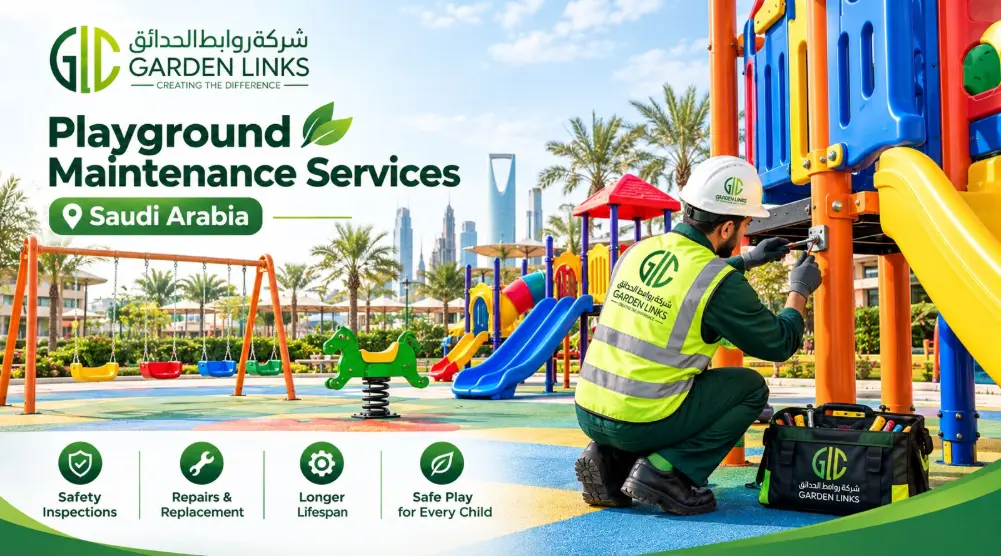

A loose swing connection, worn bearing, damaged panel, or small crack in rubber flooring can quickly become a larger maintenance problem if the cause is not identified early. Playground Maintenance Services Saudi Arabia should therefore focus on finding defects before they affect playground equipment, safety flooring, anchors, drainage, moving parts, and structural connections.
For schools, nurseries, residential compounds, public parks, hotels, resorts, and commercial properties, professional maintenance should include playground inspection, preventive maintenance, corrective repairs, spare-part assessment, flooring checks, drainage review, and written maintenance records.
The goal is to understand what is failing, why it is failing, and whether the correct action is repair, adjustment, component replacement, or further technical assessment.
Why Professional Playground Maintenance Matters
Playground equipment faces repeated movement, outdoor exposure, and daily use. Wear often begins around chains, joints, fasteners, flooring edges, bearings, or equipment bases.
A minor fault can place extra pressure on connected components. A small flooring gap can also grow when sand, water, or foot traffic enters it.
Early maintenance helps facility teams plan repairs before problems become harder or more expensive to manage. It also creates a clear record of the playground’s condition.
Different types of outdoor playground equipment wear in different ways, so each unit should be assessed according to its design, movement, materials, and level of use.
What Should Professional Playground Maintenance Services in Saudi Arabia Include?
A professional service should begin with a full site assessment. The technician should inspect each equipment unit, the surface below it, and the surrounding area.
The agreed scope may include:
- Visual and operational inspection
- Structural and mechanical checks
- Cleaning and preventive maintenance
- Minor adjustments and approved lubrication
- Flooring and drainage inspection
- Identification of required spare parts
- Repair and replacement recommendations
- A written condition report
The quotation should clearly explain what work is included. A vague description such as “general maintenance” does not show whether flooring, moving parts, drainage, or replacement components are covered.
Some minor work may be completed during the inspection visit. Larger repairs, specialised parts, structural work, or wider flooring replacement may require a separate quotation.
Playground Inspection, Preventive Maintenance, Repair and Replacement
These services are connected, but they are not the same.
Routine Inspection
A routine inspection looks for visible problems such as damaged panels, missing parts, debris, loose components, sharp edges, and flooring defects.
It helps identify faults that need closer assessment.
Preventive Maintenance
Preventive maintenance reduces avoidable wear. It may include cleaning, tightening approved fasteners, treating small coating defects, adjusting moving parts, or lubricating components where permitted.
Corrective Repair
Corrective repair addresses a confirmed problem. Examples include replacing a swing seat, repairing a surface joint, changing a bearing, or securing a loose connection.
Component Replacement
A damaged chain, panel, bearing, grip, seat, handle, or protective cap may be replaceable without changing the entire equipment unit.
The new part must match the original design, dimensions, fixing method, and intended movement.
Full Equipment Replacement
Full replacement may be more suitable when the main structure is seriously damaged, corrosion is extensive, foundations have failed, or compatible parts are unavailable.
The decision should follow a competent assessment rather than appearance alone.
Playground Maintenance and Inspection Checklist
| Area | What to Inspect | Common Problems | Possible Action |
| Structural frame | Posts, beams, welds, and stability | Bending, cracks, rust, or movement | Assess, treat, repair, or replace where required |
| Anchors and base plates | Ground fixing, concrete, and movement | Loose anchors, cracked concrete, or water near bases | Tighten, repair, improve drainage, or monitor |
| Bolts and fasteners | Nuts, screws, caps, and brackets | Loose, missing, worn, or mismatched parts | Tighten approved parts or replace damaged items |
| Swings | Chains, seats, hooks, and bearings | Worn chains, cracked seats, or loose connections | Adjust, repair, or replace worn parts |
| Slides | Surface, joints, steps, and handrails | Cracks, loose joints, or damaged access points | Assess, secure, repair, or replace parts |
| Climbing equipment | Grips, ropes, nets, ladders, and platforms | Loose grips, frayed ropes, or damaged nets | Tighten, repair, monitor, or replace |
| Moving parts | Bearings, bushes, pivots, hinges, and springs | Stiff movement, excess play, or unusual noise | Clean, adjust, lubricate where approved, or replace |
| Plastic panels | Barriers, covers, panels, and edges | Fading, cracks, deformation, or loose fittings | Monitor, repair, or replace where needed |
| Rubber flooring | Joints, edges, level, and equipment bases | Cracks, gaps, lifted edges, or depressions | Assess the cause and repair affected areas |
| Artificial grass | Seams, edges, infill, and shock pad | Open seams, lifted edges, or exposed padding | Refix, repair, add infill, or replace locally |
| Drainage | Drains, channels, falls, and water flow | Blockages, standing water, or poor runoff | Clear, repair, improve flow, or monitor |
| Shade structures | Fabric, posts, cables, and anchors | Torn fabric, loose fittings, or corrosion | Tighten, repair, treat, or replace |
| Surrounding area | Benches, paths, kerbs, fencing, and vegetation | Debris, trip points, loose seating, or overgrowth | Clean, secure, trim, or repair |
| Maintenance records | Dates, photographs, repairs, and open issues | Missing reports or unclear repair history | Update records and schedule follow-up |
Visual and Operational Playground Inspections
A visual inspection focuses on visible damage, missing components, vandalism, rust, surface defects, and obvious movement at equipment bases.
An operational inspection checks how equipment behaves during movement. This may include swing motion, rotating parts, bearings, springs, pivots, and unusual sounds.
Equipment may look acceptable while still having worn joints or internal movement points. Both inspection types are therefore important.
Readers who need wider guidance on equipment, surfacing, inspection, and protective features can review our Playground Safety Standards in Saudi Arabia guide.
Playground Structural Frames, Fasteners, Welds and Anchors

The main frame supports the equipment and connected activities. Posts and beams should be checked for bending, cracks, impact damage, rust, coating failure, and movement.
Bolts, nuts, brackets, screws, and protective caps should remain secure and suitable for the original connection. A repeatedly loose bolt may indicate movement, wear, or poor alignment rather than a simple tightening issue.
Welds should be assessed for cracks, separation, corrosion, or deformation. Base plates and anchors should also remain stable.
Water collection, cracked concrete, exposed foundations, or movement at the base should be recorded and investigated.
Understanding common playground equipment materials helps facility teams recognise how steel, coatings, plastic panels, and surfacing may age outdoors. For a deeper comparison, review our Playground Equipment Materials in Saudi Arabia guide.
Playground Swings, Slides, Climbing Equipment and Moving Parts
Swings
Swing checks should cover chains, seats, hooks, suspension points, bearings, and frame connections.
Chains may show wear, corrosion, or distortion. Seats may crack, loosen, or develop damaged edges. Bearings should move without excessive looseness or unusual noise.

Slides
Inspect slide surfaces, joints, sidewalls, entry areas, exits, platforms, steps, handrails, and fixing points.
Loose sections, rough damage, exposed fasteners, or gaps between connected parts should be assessed before continued use.
Climbing Equipment
Climbing grips, ladders, ropes, nets, platforms, overhead bars, and barriers require close inspection.
Look for loose grips, damaged fittings, frayed ropes, uneven net tension, unstable platforms, and missing protective parts.
Rotating Components
Bearings, bushes, hinges, pivots, springs, and rotating joints should move within their intended range.
Cleaning, adjustment, lubrication, or replacement should follow the equipment design and manufacturer guidance.
Playground Plastic Panels and Protective Barriers
Strong sunlight may fade plastic components. Fading alone does not always mean a part needs replacement.
Inspectors should look for cracks, splits, deformation, loose panels, sharp damage, missing covers, exposed fasteners, and movement at fixing points.
Protective barriers need particular attention because they help control access and reduce exposure to open platform edges.
Playground Corrosion, Rust and Coating Damage
Outdoor equipment in Saudi Arabia may face sunlight, dust, heat, humidity, and repeated cleaning.
Small coating defects can expose the metal below. The affected area should be assessed and prepared before a protective finish is applied.
Painting directly over rust may hide the problem without treating it. Corrosion around welds, bolts, chains, base plates, and hidden connection points deserves closer review.
Playground Rubber Flooring and Artificial Grass Inspection
Rubber flooring should be inspected as part of the full playground, not as a separate decorative surface.
Rubber tiles may develop lifted edges, open joints, loose corners, or movement around equipment bases.
Poured rubber surfaces may show cracks, local depressions, separation, worn areas, or damaged edges.
Artificial grass checks should include seams, perimeter fixing, infill, level changes, and the shock pad beneath the surface. An exposed or uneven shock pad should be assessed before the affected area grows.
Surface repairs may fail again when the base or drainage problem remains unresolved.
For more detail on playground surfacing, rubber flooring defects, repairs, and maintenance, review our Playground Rubber Flooring in Saudi Arabia guide.

Playground Drainage and Surrounding Site Conditions
Drainage affects flooring, foundations, and equipment bases.
The inspection should check for blocked drains, standing water, poor surface falls, damaged channels, soil entering the area, and moisture beneath flooring edges.
Tree roots, overgrown vegetation, damaged kerbs, pathways, fences, benches, bins, and shade structures may also be reviewed when included in the service scope.
Fixing a surface crack without correcting the water source may lead to repeated damage.
Playground Cleaning and Preventive Maintenance
Cleaning removes sand, dust, leaves, stones, litter, and debris from equipment and surrounding surfaces.
Handles, seats, platforms, drainage channels, and spaces below equipment may also need attention.
Preventive work may include:
- Tightening approved fasteners
- Adjusting suitable moving components
- Replacing small worn parts
- Treating minor coating damage
- Securing flooring edges
- Clearing drains
- Lubricating approved parts
Cleaning alone is not a complete maintenance service. A clean playground may still have loose anchors, worn bearings, damaged joints, or hidden corrosion.
Playground Repair or Replacement: How the Decision Is Made
Repair may be suitable when the damage is local, the structure remains sound, and compatible parts are available.
Examples may include replaceable seats, bearings, panels, fasteners, chains, grips, or small flooring areas.
Replacement may be more practical when:
- Structural damage is serious
- Corrosion has weakened the component
- The same fault keeps returning
- Foundations are badly damaged
- Compatible parts cannot be sourced
- Repair cannot restore reliable operation
The decision should consider equipment age, damage location, service history, manufacturer guidance, expected use, and part availability.
Equipment with significant movement, exposed sharp damage, or unresolved structural concerns may need temporary isolation until assessed.
How Often Should Playground Equipment Be Inspected and Maintained?
There is no single schedule that suits every playground.
Inspection and maintenance frequency depends on:
- Daily usage
- Equipment type
- Site condition
- Previous damage
- Equipment age
- Local environment
- Vandalism risk
- Manufacturer guidance
- Facility procedures
A busy school or public park may need more frequent visual checks than a small residential site.
Additional reviews may also be needed after storms, construction work, vandalism, irrigation problems, major events, or long closures.
Playground Inspection Records and Maintenance Reports

A maintenance visit should leave a clear record of what was found and completed.
A useful report may include:
- Site and inspection date
- Equipment inventory
- Condition photographs
- Defect descriptions
- Repair priorities
- Work completed
- Parts replaced
- Outstanding actions
- Restricted equipment
- Follow-up recommendations
Records help managers track repeated faults, verify completed work, manage warranties, and plan future budgets.
Professional Playground Maintenance Services Saudi Arabia should treat documentation as part of the service, not as an optional extra.
Playground Spare Parts and After-Sales Support
Replacement parts can be difficult to source when the equipment model or original supplier is unknown.
The maintenance provider may need photographs, dimensions, connection details, model information, and previous service records.
A replacement component should match the original design, material, fixing method, movement, and intended use.
Ask whether the provider can maintain equipment supplied by another company. This may be possible when the unit is identifiable and suitable parts are available.
After-sales support may include follow-up visits, urgent repairs, planned maintenance, and monitoring of previously repaired areas.
Playground Maintenance for Different Project Types in Saudi Arabia
Schools and Nurseries
Schools often experience concentrated daily use. Swings, climbing grips, steps, platforms, and access areas may require closer attention.
Staff should also have a simple process for reporting faults between scheduled visits.
Residential Compounds
Compound playgrounds may become busiest during evenings, weekends, and cooler months.
Maintenance plans should consider resident reporting, shared access, lighting, surface condition, and spare-part response.
Public Parks
Public parks may face high usage, vandalism, litter, missing components, and larger equipment inventories.
Clear reports help municipal teams prioritise urgent and planned repairs across several locations.
Hotels and Resorts
Hotels and resorts need functional equipment and a clean appearance.
Planned maintenance can reduce disruption during busy periods and help property teams coordinate work with landscaping and general facilities.
You can also review our completed playground projects in Saudi Arabia to see different school, compound, park, and hospitality playground environments where maintenance needs may vary by equipment type, usage, and site conditions.
Playground Maintenance for Saudi Weather and Local Conditions
Riyadh and Inland Cities
Strong sunlight, dry heat, dust, and sand may affect coatings, panels, joints, and moving components.
Dust can collect around bearings, flooring gaps, and equipment bases. Irrigation leaks may also create local drainage problems despite the dry climate.
Jeddah, Dammam, and Khobar
Coastal humidity may increase attention to corrosion, coating failure, metal joints, chains, bolts, and base plates.
Moisture and poor drainage around foundations should also be checked.
Not every site experiences the same wear. Equipment material, shade, exposure, usage, cleaning, and previous maintenance all affect condition.
What Should You Ask Before Hiring a Playground Maintenance Company in Saudi Arabia?
- Will you inspect the full playground before giving a quotation?
The site review should cover equipment, flooring, drainage, anchors, shade, and surrounding areas. - What exactly is included in the service?
Ask whether the scope covers inspections, cleaning, preventive work, repairs, flooring, spare parts, and follow-up support. - Do you have experience with commercial playground equipment?
The company should understand swings, slides, climbing units, moving parts, safety surfaces, and shared public spaces. - Can you provide compatible replacement parts?
Ask how chains, seats, bearings, panels, bolts, and other parts will be identified. - Will you provide a written condition report?
The report should include photographs, completed work, repair priorities, and outstanding actions. - Do you offer urgent repairs and support after completion?
Confirm whether planned visits, emergency response, flooring repairs, and follow-up checks are available.
Common Playground Maintenance Mistakes to Avoid
Waiting for Complete Failure
A fault may affect connected parts before the equipment stops working.
Tightening Parts Without Finding the Cause
Repeated movement may point to worn components, alignment issues, or loose anchoring.
Using Mismatched Replacement Parts
Incorrect bolts, chains, seats, or bearings may not suit the original system.
Painting Over Corrosion
This may hide rust without preparing or treating the damaged surface.
Ignoring Flooring and Drainage
Repairing equipment alone leaves surface gaps, trip points, or water problems unresolved.
Keeping No Maintenance History
Without records, repeated faults and previous repairs are difficult to track.
Treating Cleaning as Full Maintenance
A clean playground can still have worn joints, loose anchors, or structural damage.
Frequently Asked Questions About Playground Maintenance in Saudi Arabia
How often should playground equipment be inspected?
Inspection frequency depends on usage, equipment type, site conditions, manufacturer guidance, and previous damage. Busy schools, public parks, and compounds may need more frequent visual checks than low-use locations. Extra inspections may also be useful after vandalism, severe weather, construction activity, or extended closure.
What is included in playground maintenance services?
A professional service may include visual and operational inspections, structural checks, cleaning, approved tightening, moving-part assessment, flooring and drainage inspection, repairs, spare-part identification, and written reporting. The exact scope should be agreed before work begins and based on the playground’s condition.
How much does playground maintenance cost in Saudi Arabia?
There is no single fixed price for playground maintenance in Saudi Arabia. Cost depends on the number and type of equipment units, site condition, flooring repairs, replacement parts, labour, and whether structural or specialist work is required. A site assessment is usually needed before an accurate maintenance quotation can be prepared.
Can damaged playground equipment be repaired?
Some components can be repaired or replaced, including seats, chains, bearings, panels, fasteners, and local flooring areas. Repair is not suitable in every case. Serious structural damage, severe corrosion, repeated failure, or unavailable compatible parts may make component or full equipment replacement more practical.
How do you maintain playground rubber flooring?
Rubber flooring maintenance includes removing debris, checking joints, inspecting lifted edges, monitoring cracks, and keeping drainage clear. Small defects may be repairable, but the cause should be identified first. Base movement, poor drainage, or trapped water may cause the damage to return.
When should a playground part be replaced?
Replacement may be needed when a part is badly worn, cracked, deformed, structurally damaged, or repeatedly fails. It may also be necessary when the correct compatible part is unavailable. The decision should consider condition, repair history, manufacturer guidance, and expected future use.
Does coastal weather affect playground maintenance?
Coastal cities such as Jeddah, Dammam, and Khobar may require closer inspection of corrosion, coating damage, chains, bolts, welds, joints, and base plates. Drainage and water collection also need attention. Actual maintenance needs depend on site exposure, materials, condition, and previous service history.
Should schools keep playground inspection records?
Yes. Records help schools track faults, confirm repairs, identify repeated problems, and plan budgets. A useful record should include dates, photographs, findings, completed work, replaced parts, and outstanding issues. Clear documentation also helps staff decide when follow-up work is required.
Can a maintenance company supply replacement parts?
Many companies can source replacement parts, but availability depends on the equipment model and manufacturer. The provider should confirm dimensions, materials, fixing methods, and movement requirements before fitting anything. Improvised or mismatched components should not be used simply because the original part is difficult to find.
Playground Maintenance Service Checklist Before Approval
Confirm that the quotation includes:
- Full equipment assessment
- Structural and moving-part checks
- Flooring and drainage inspection
- Written and photographic reporting
- Clear repair priorities
- Itemised replacement parts
- Completed-work records
- Follow-up recommendations
- Support after the service
Reliable Playground Maintenance Services Saudi Arabia should give you a clear understanding of the site condition, not only a list of small repairs.
Request Playground Maintenance Services in Saudi Arabia
Professional maintenance should cover the full play environment. This includes equipment, moving parts, flooring, drainage, cleaning, repairs, replacement components, and clear service records.

Garden Links supports schools, residential compounds, public parks, hotels, resorts, contractors, and facility-management teams with playground inspection, preventive maintenance, repairs, spare parts, flooring checks, and maintenance reporting across Saudi Arabia.
Contact Garden Links with your site location, equipment photos, and maintenance requirements to request a site assessment and suitable maintenance scope.